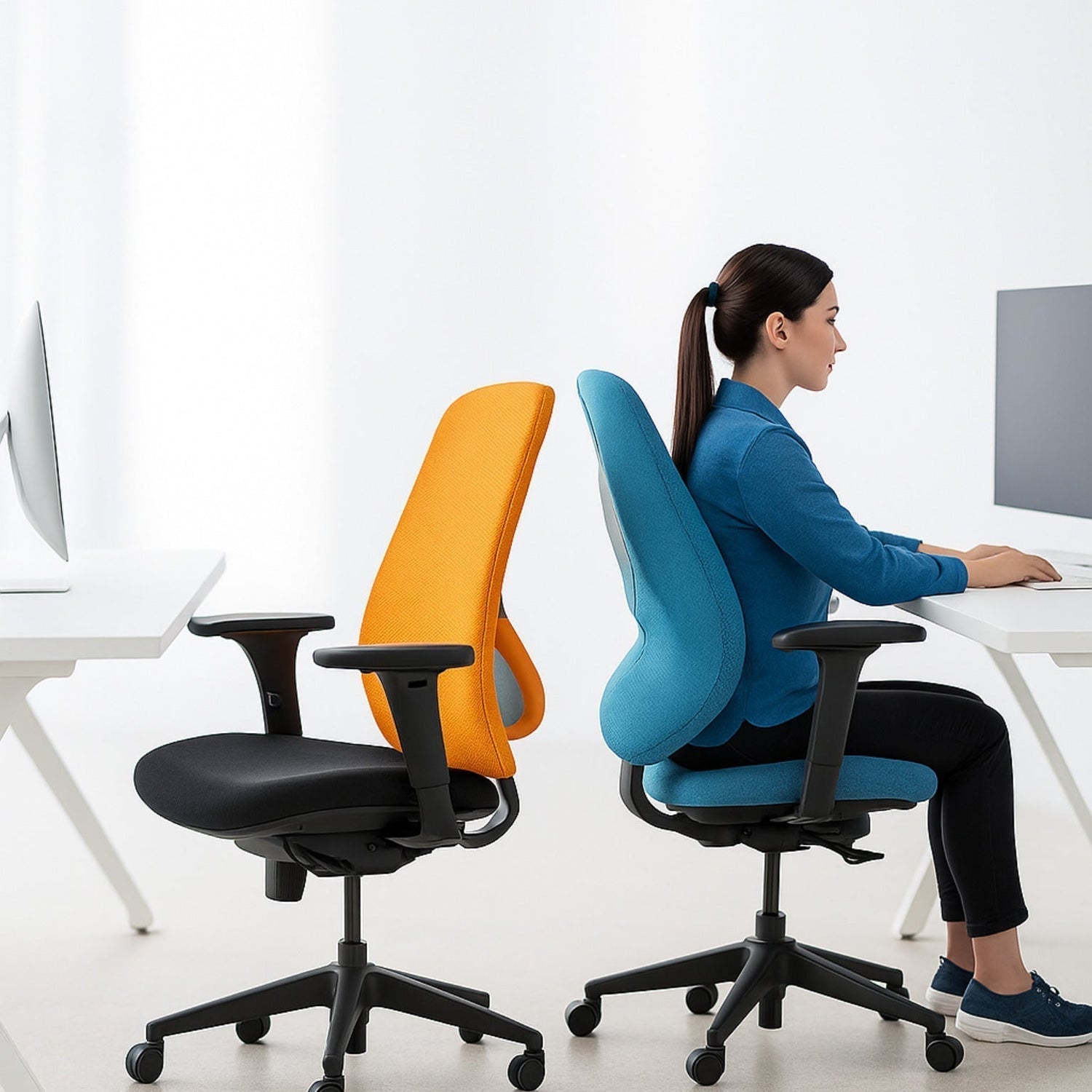
A chair for a higher load requirement needs a clear, approved rating and dimensions that fit the person. A large seat alone does not establish its capacity, and a high rating alone does not establish comfort.
The most useful comparison treats load, fit, and workload as three separate requirements. That makes it easier to choose a complete configuration rather than relying on a broad “big and tall” label.
The rating belongs to the complete chair
A published capacity describes a model and its approved configuration. The cylinder, mechanism, base, casters, and selected options need to remain appropriate for that requirement.
Visual cues are unreliable. A thick cushion, large metal base, or tall back does not prove a higher rating. Substituting an unapproved component can also change what the manufacturer supports.
When a product listing and manufacturer document differ, the current model-specific documentation and the selected components should be confirmed before ordering. Older ratings should not simply be carried into a new comparison.
Seat width and usable space
Seat width describes the cushion, while spacing between the arms describes the usable sitting space. Both can matter. A wide cushion with closely positioned arms may still feel restrictive.
Seat depth is separate again. A heavier user does not necessarily need a deeper seat; thigh length determines how much support is useful while retaining clearance behind the knees.
The preferred back shape and cushion feel remain personal. More padding is not automatically better support, and foam density alone does not establish a complete chair's performance.
Intensive use is a different specification
A chair used across several shifts has a different workload from a chair used by one person for an ordinary workday. Intensive-use or 24/7 suitability should be established for the actual model rather than inferred from capacity.
Shared seating also benefits from usable adjustment ranges and controls people can operate easily. A single oversized chair may not suit every user on the station.
Three OMC models to compare
PT79HD: an intensive-use, heavy-duty option

The PT79HD, formerly IU79HD, belongs to the manufacturer's 350 lb-rated intensive-use heavy-duty family. It combines a high upholstered back with a seat slider and a memory-foam seat cushion.
It is a useful comparison when that capacity, workload, and seat fit match the requirement. A taller back does not remove the need to compare depth, arm spacing, and working height.
MX88IU: the current Maxwell specification

OM Seating's 2026 Maxwell pricebook lists the standard MX88IU at 450 lb, with a 24-inch-wide seat, approximately 18–20.5-inch seat depth, and an approximate 18–23-inch seat-height range.
The current manufacturer rating supersedes the older 400 lb figure still found in some store material. OMC should confirm the intended components and workload for the ordered configuration.
Its wider platform can be useful without requiring an unusually deep seat. The usable arm spacing remains part of the fit comparison.
7878MX: a Maxwell model being phased out

The 7878MX is also listed at 450 lb in the current Maxwell pricebook. It uses a 24-inch-wide seat with an approximate 18–20.5-inch depth range and 18–23-inch standard height range.
The same pricebook marks this model as phasing out. Confirm availability before ordering, and compare the MX88IU’s different back dimensions if you need a current Maxwell alternative.
The back design gives it a different appearance and contact profile within the Maxwell family. Choosing between these models should involve the back feel and available configuration, rather than assuming one higher price guarantees a better fit.
A comparison based on current manufacturer data
| Model | Standard manufacturer rating | Main comparison point |
|---|---|---|
| PT79HD | 350 lb | High upholstered intensive-use heavy-duty design |
| MX88IU | 450 lb in the 2026 Maxwell pricebook | 24-inch-wide Maxwell seat platform |
| 7878MX | 450 lb in the 2026 Maxwell pricebook | Tapered back; phasing out, so confirm availability |
Standard specifications are a starting point. Alternative components and any special usage requirements need confirmation for the complete chair.
Floor contact, access, and the desk
The caster or glide selection needs to suit the floor and approved load. An aftermarket wheel advertised for a high weight is not evidence that the entire chair becomes suitable for that weight.
The chair also needs room to enter, turn, and reach the work surface. Arm width, base diameter, and knee clearance can become important in a restricted workspace.
Maintenance and warranty
Routine inspection can reveal loose fasteners, damaged wheels, or a cylinder that no longer holds height. A missing, broken, or worn support component calls for approved service before continued use.
Cleaning follows the exact upholstery instructions. Maintenance products and application points should follow the manufacturer's guidance rather than a generic lubrication schedule for every moving part.
Warranty coverage varies by model, component, and use. Structural coverage, upholstery, consumables, and service labor should not be treated as one blanket promise.
A clear requirement makes the shortlist stronger
A useful request identifies the required capacity and workload, seat dimensions that work for you, arm spacing, and the desk height. A trial sit can add information about cushion and back feel where available.
OMC can help confirm current ratings and a suitable configuration. The result should meet the actual requirements without assuming that a larger chair is automatically the better chair.