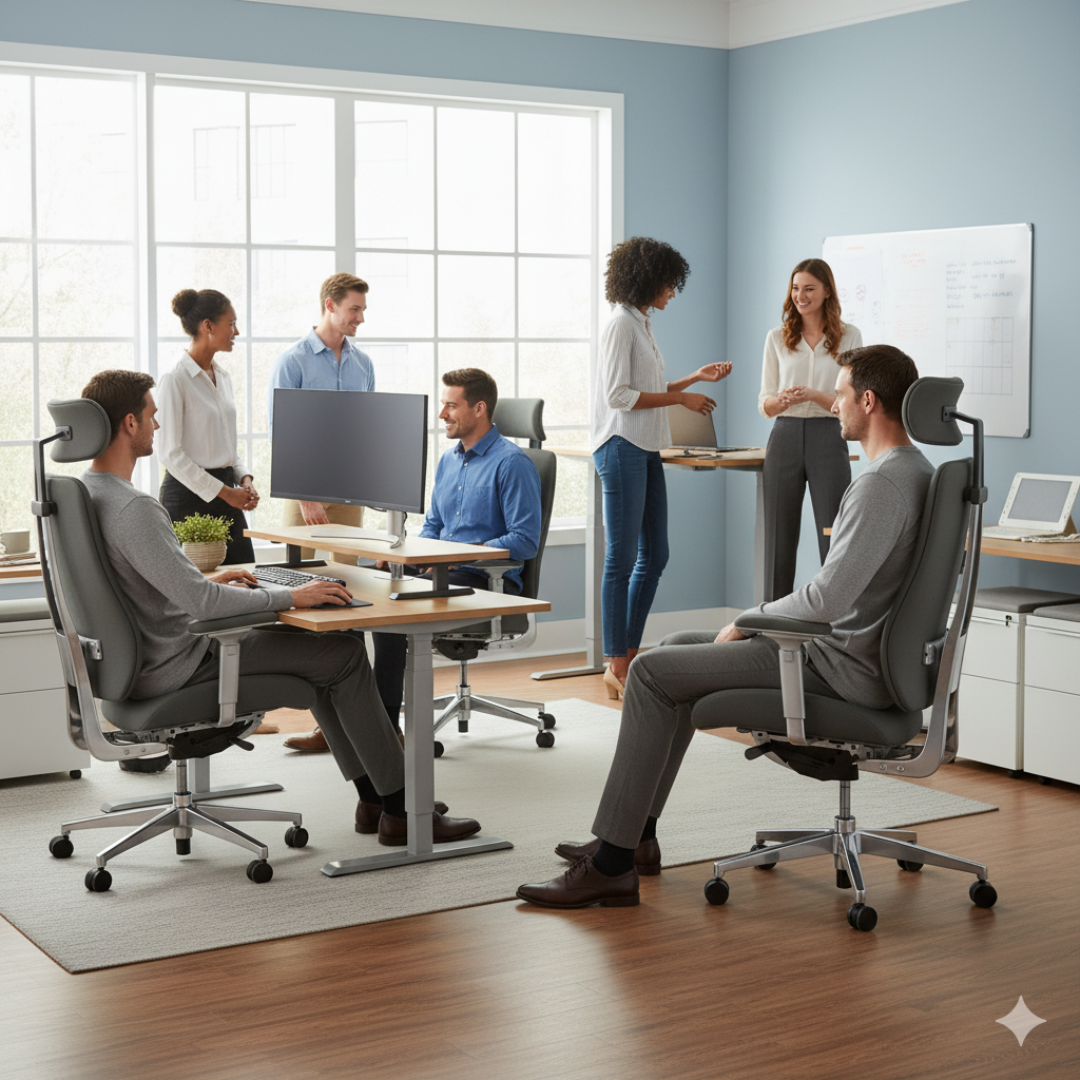
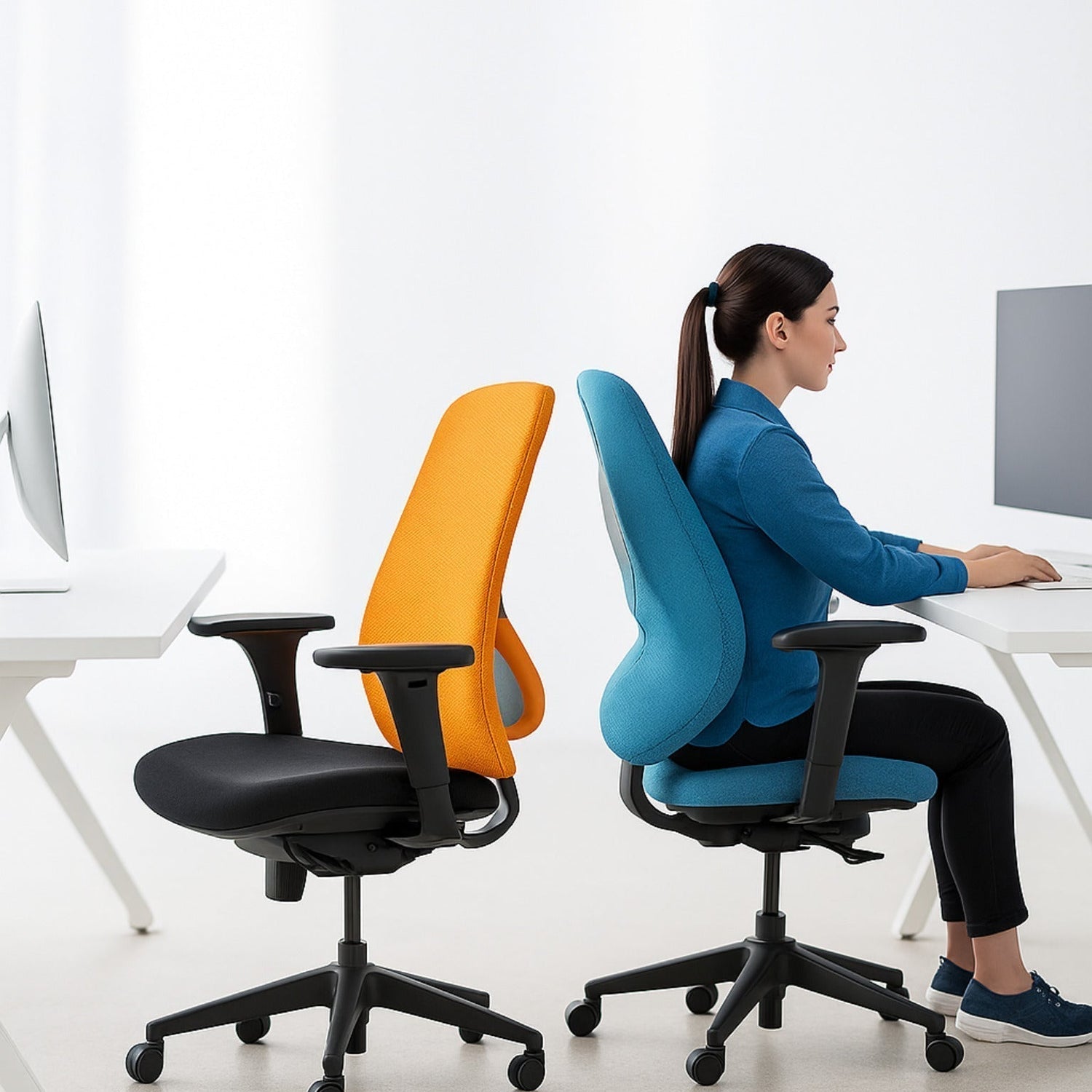
An executive office chair usually describes a style and intended setting: a substantial back, coordinated upholstery, and a look that suits a private office or meeting room. It does not establish one standard set of ergonomic features.
Some executive designs emphasize padded contact and a simple recline. Others use mesh, a headrest, or detailed multi-function controls. The useful choice is the one whose fit and movement suit the work as well as the room.
Appearance and function are separate comparisons
A high back can provide more contact behind the torso, but it does not always include a headrest. Leather-like upholstery may be real leather, a synthetic covering, or another material that needs its own specification.
An executive label also does not guarantee more adjustment than a task chair. A task model may offer independent angles and a seat slider, while an executive model may deliberately use fewer controls.
Neither approach is automatically better. The person who prefers a straightforward recline may value a different mechanism from someone who wants to position the seat and back separately.
The seat still needs to fit
Usable width, minimum depth, and working height determine whether the chair can support the person at the desk. Large cushions can look inviting while remaining too deep for a smaller user.
Armrests need to support the forearms without lifting the shoulders or blocking close access. A tall back or headrest should land comfortably rather than push the head forward.
Base size and the space around the desk matter as well. An imposing appearance is less useful if the chair cannot move comfortably through the room.
A private office and a conference room have different needs
An individual desk chair can be configured around one user's proportions and preferred adjustments. Shared conference seating benefits from an approachable setup that several people can use.
A self-weighing or body-weight-activated mechanism can reduce conventional tension adjustment, but it cannot automatically change seat dimensions to fit everyone. Meeting duration, room layout, and storage needs remain relevant.
Three current OMC examples
CE2P: pillow-top executive and conference seating

The CE2P pairs a pillow-top design with a body-weight-activated mechanism and several arm choices. It is a useful comparison when padded contact and that movement style are priorities.
The pillow top is not a separate adjustable headrest. The selected upholstery also determines the covering; leather is not established by the CE2P name alone.
AF529: a high mesh back with a headrest

The AF529 offers a high mesh back, an adjustable headrest, and a synchronous mechanism with several locking positions. It takes a different approach from a heavily upholstered executive design.
The headrest and mesh contact should suit the user. A tall profile does not by itself determine minimum seat fit or suitability for a particular load requirement.
OM5-EX: the current OM5 Evolved high-back design

The current OM5-EX uses a taller PolyFlex back within the Evolved family, alongside Body Activated Motion, lumbar adjustment, and seat-depth adjustment.
It is a different movement and back-material preference from the other examples. Automatic recline resistance reduces one setup task, while height, depth, lumbar positioning, and arms still need attention.
Materials and maintenance
Upholstery affects appearance, contact feel, cleaning, and price. Material grade is not a universal durability score, and a premium covering cannot compensate for unsuitable seat dimensions.
The exact fabric, leather, or synthetic covering should come with appropriate care instructions. A general claim that all executive chairs are easy to maintain or last longer than task chairs is too broad.
Selected casters also need to suit the flooring. Smooth movement depends on the approved wheel type, the floor, and the condition of both.
Budget for the options you value
An executive design may cost more for its back construction, upholstery, arms, or finish. The useful question is which of those changes you will appreciate in daily use.
Comparing complete configurations is more informative than comparing starting prices. Warranty coverage and return conditions also need to be read for the actual order and intended use.
Common questions
Are executive chairs better for the back?
The category cannot establish that. Suitable dimensions, back contact, useful controls, and the surrounding desk determine the working fit. Persistent discomfort deserves appropriate professional advice.
Does every executive chair include a headrest?
No. A tall upholstered back, pillow top, and separately adjustable headrest are different designs. The current model and option list should state what is included.
Can an executive-style chair work at a home desk?
Yes, when its dimensions, arms, and base fit the room and desk. A smaller task chair can also be the more comfortable choice when space or minimum seat depth is the limitation.
Choose the style around the work
A well-chosen executive chair combines the appearance you prefer with a fit and mechanism you can use comfortably. OMC can help compare current models and complete configurations around those requirements.