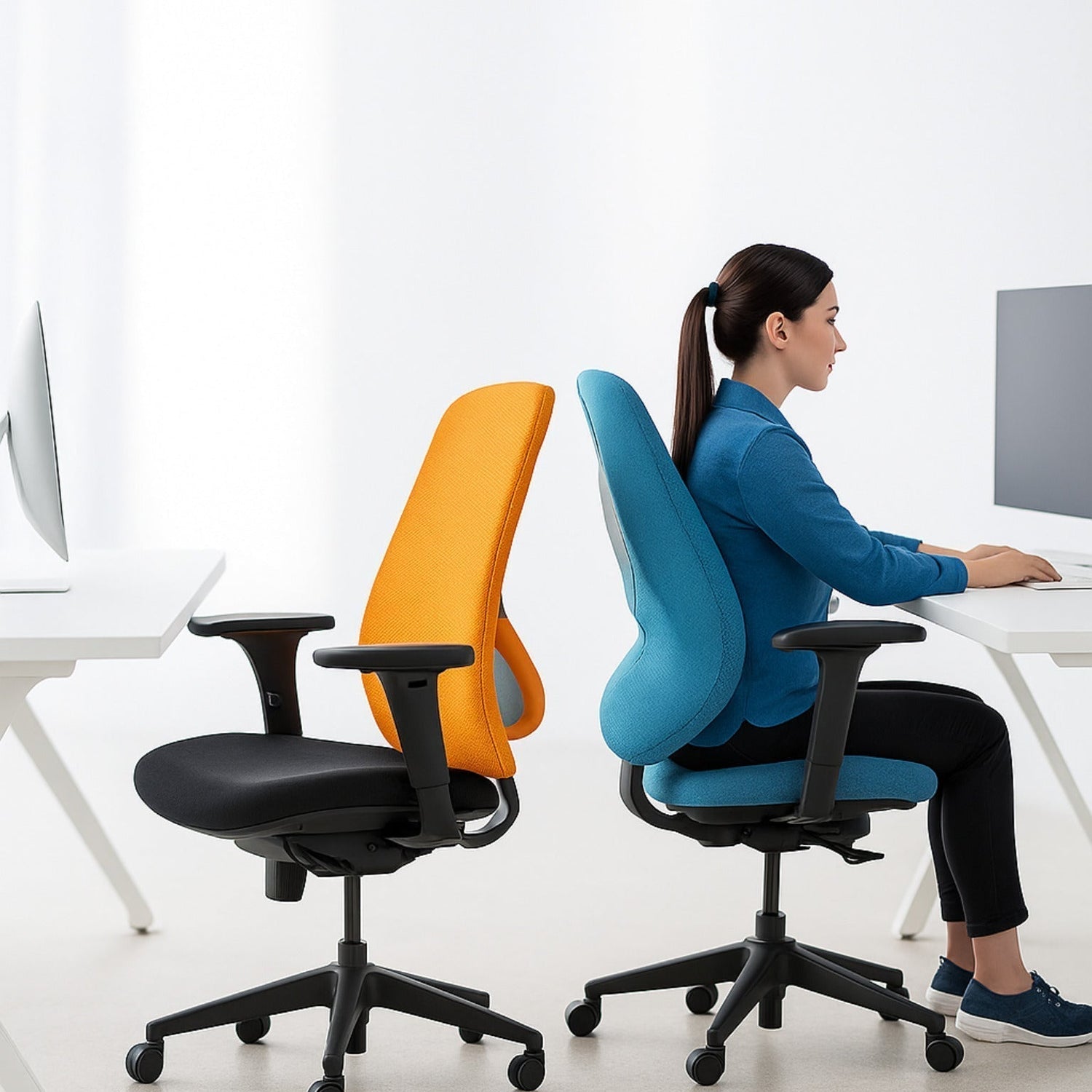
A luxury office chair can be appealing for its materials, finish, and the way it feels. The most useful premium is the one you can connect to a benefit you value: a preferred back shape, a more suitable arm range, a particular recline, or an upholstery you enjoy.
A higher price does not automatically establish better fit, comfort, or durability. Those qualities need to be considered separately from the appearance and brand position.
What the extra price can change
A premium configuration may use a different back construction, more elaborate arms, a polished base, a particular covering, or a specialized mechanism. Some changes affect the working experience; others mainly affect appearance.
Both can be valid preferences. Knowing which change you are paying for makes it easier to compare a refined-looking chair with a more straightforward model that may offer similar fit.
The label “luxury” is a description of positioning, not a standardized performance or health rating.
Fit is the part that cannot be bought around
The minimum and maximum seat dimensions still need to work with your body and desk. A deep, generously padded seat can be unsuitable for a shorter thigh length. A wide seat can still feel restricted by the arms.
Back contour, headrest position, and working height need the same attention. A premium material on an unsuitable platform does not create a better sitting position.
A trial sit, where available, can help judge cushion firmness, back contact, and recline feel. Those preferences are difficult to predict from a photograph.
Materials: identify the actual covering
Real leather, bonded leather, and leather-like synthetics have different compositions and care requirements. A soft appearance in a photograph does not identify the material.
Fabric and mesh also offer different contact surfaces and visual choices. An upholstery grade commonly affects pricing and material selection, rather than providing a universal scale of durability.
The specific covering's documentation should establish its cleaning method and relevant performance. More expensive upholstery is not automatically easier to clean or more appropriate for a particular workplace.
Movement can be the worthwhile upgrade
Someone who likes precise positioning may value a full multi-function control. Someone who prefers coordinated movement may value synchronous recline. A self-weighing mechanism can provide a different feel with less conventional tension setting.
The preferred approach depends on the task and user. More controls are useful when they provide positions you actually want, rather than simply making the chair more complex.
Three current OMC designs to compare
CE2P: a padded executive and conference approach

The CE2P combines a pillow-top design with a body-weight-activated mechanism and several available arm styles. Its appeal may be the padded contact feel and coordinated executive appearance.
The exact upholstery and arms determine the ordered configuration. The pillow top is not a separately adjustable headrest, and the model does not establish leather as the default covering.
TY68b8: configurable support with full controls

The TY68b8 brings a full multi-function control to the Truly family. It is a useful comparison when detailed positioning and that back design matter to you.
Selected finishes, arms, upholstery, and any headrest can change the total. The complete configuration is the appropriate basis for a price comparison.
OM5-EX: the current Evolved movement style

The current OM5-EX combines a taller PolyFlex back with Body Activated Motion, lumbar adjustment, and seat-depth adjustment. It offers a different support material and movement preference from a heavily upholstered executive model.
Automatic recline resistance reduces one conventional adjustment. Seat height, usable depth, arms, and lumbar positioning still determine the fit.
Comfort and health claims deserve different evidence
A more comfortable chair may make the working day feel easier. That does not establish a guaranteed productivity improvement, disease prevention, or the resolution of back pain.
Useful seating provides support and choices of position within a wider workstation. Movement, equipment placement, and appropriate healthcare advice remain relevant where symptoms require it.
Warranty, service, and long-term value
Long-term value involves more than the price of a new chair. Available replacement parts, clear configuration records, suitable care, and relevant warranty coverage can all matter.
Coverage needs to be read by component and use. Structural terms, upholstery, consumables, and service labor should not be treated as one blanket lifetime promise.
Normal wear and the actual workload also affect the experience. A luxury label cannot guarantee a fixed lifespan.
Care should preserve the selected finish
Routine cleaning follows the exact material's instructions. Products for one leather finish or synthetic covering may be unsuitable for another. Prolonged direct sunlight and inappropriate cleaning can affect appearance regardless of the original price.
Fasteners, casters, and support components deserve periodic inspection in line with the manufacturer's guidance. Damaged components need suitable approved repair before continued use.
A premium purchase with a clear purpose
The most satisfying upgrade is one you can describe: more comfortable back contact, useful arm positioning, a recline you prefer, or a finish that suits the room. The price should reflect those selected choices.
OMC can help compare current models and complete configurations. That makes a premium chair a deliberate preference within a suitable setup, rather than a promise attached to an expensive label.