A leather office chair can bring a particular feel and appearance to a workspace. The material is only one part of the purchase, however. Seat size, back shape, movement, and arm position determine how the chair works at the desk.
The most useful comparison identifies the exact upholstery, the chair beneath it, and the care that covering requires. “Leather” by itself does not establish comfort, durability, or the right fit.
What the material description means
Real leather, bonded leather, and synthetic leather-like coverings are different materials. A photograph can make them look similar, so the written specification matters.
- Real leather: an animal-hide material whose grain, finish, thickness, and treatment influence its feel and care.
- Bonded leather: a composite material containing leather fibers with other components; it should not be treated as equivalent to a full leather hide.
- Leather-like synthetics: coverings such as certain polyurethane or vinyl materials that provide a similar appearance with different properties.
A general “genuine leather” label also does not describe every detail of quality. The specific supplier, finish, construction, and intended use provide a better basis for comparison.
Grain and finish are different parts of the specification
Full-grain and top-grain descriptions concern the leather's surface and processing. They do not by themselves establish how stain-resistant or comfortable a finished chair will be.
A protected finish can have different cleaning requirements from a more natural, less coated surface. The feel, appearance, and tolerance of spills depend on that finish as well as the underlying leather.
The best choice is the material whose properties suit the room and use. A leather selected for its natural character may call for different care from a covering selected for frequent cleaning.
Fit and movement still come first
The seat needs enough usable width and a depth that lets you use the backrest comfortably. Working height needs to suit the desk and foot support. Arm height and spacing need to work without blocking close access.
Leather does not add a seat slider, lumbar adjustment, or headrest to a chair that lacks those features. An executive appearance does not establish a more adjustable mechanism than a task model.
Independent controls, synchronous recline, and body-weight-responsive mechanisms offer different ways to move. Choosing the one you prefer is usually more useful than assuming the highest price includes the best movement for everyone.
Leather options across the OMC range
Some OM Seating models offer leather choices alongside fabric choices. Current pricebooks identify leather groups such as LG1, LG2, and LG3, with specific materials and color availability within those groups.
Those labels are pricing and material categories, not a universal durability ranking. The exact available covering should be confirmed for the model and order.
A mesh-back chair may offer a different seat upholstery while retaining its mesh back. Selecting leather for the seat does not automatically turn the entire chair into an upholstered leather-back design.
A current model to compare: Office Master CE2P

The CE2P combines a pillow-top design with a body-weight-activated mechanism for executive and conference use. Several arm styles and upholstery choices are available.
It is a useful starting point when you like that padded contact feel and movement style. The actual selected upholstery determines whether the ordered chair has leather, fabric, or another available covering; the model name alone does not.
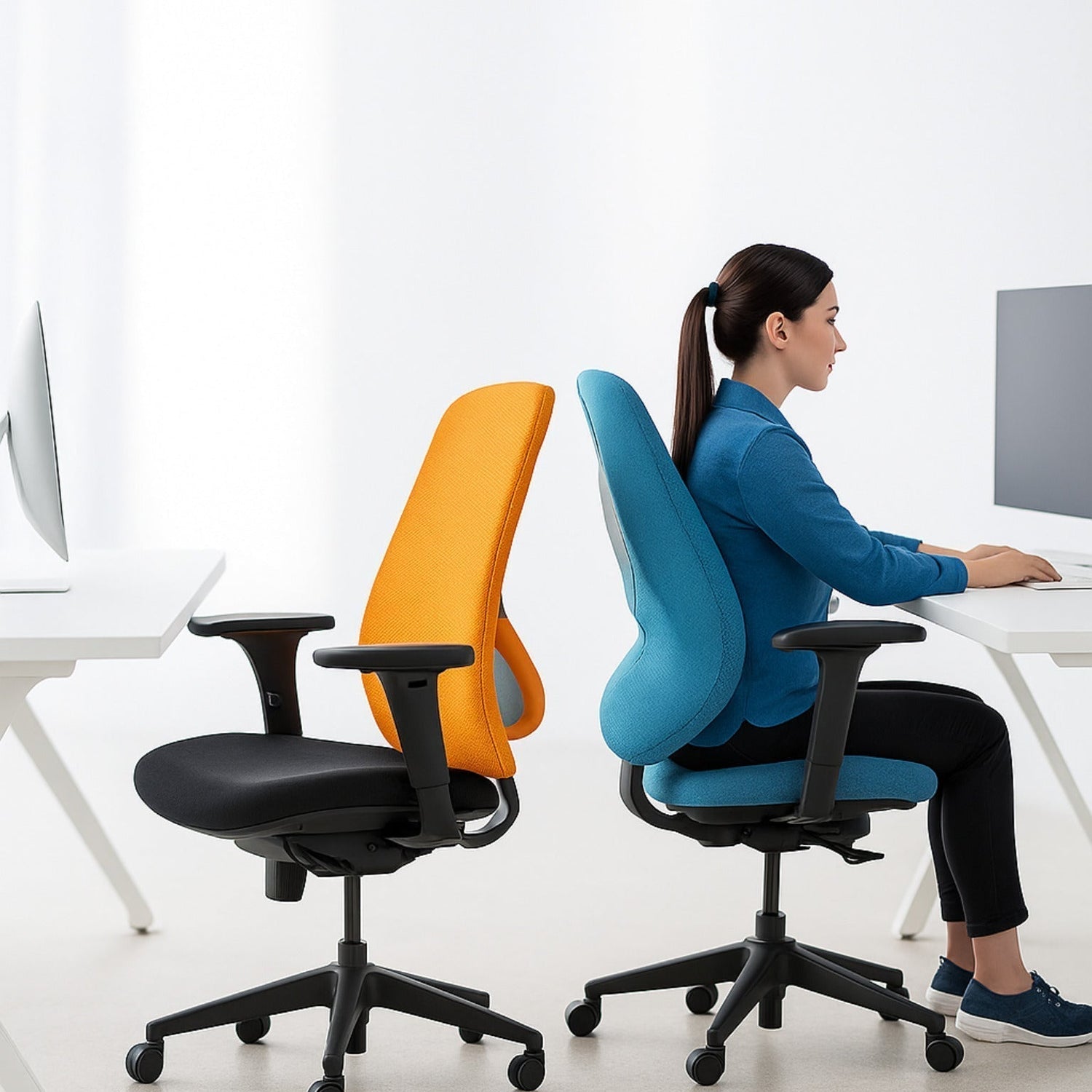
The product photograph identifies the chair design. Available materials, colors, and selected arms may differ from the pictured configuration. The configured product page or quote should state the exact choice.
Budget for the complete configuration
Leather can add to the price of an otherwise suitable model. Arms, cylinders, bases, and other options can change the total as well.
A useful comparison separates the price of the chair and functional requirements from the premium for the preferred covering. That makes it easier to decide whether the material is the upgrade you value most.
Warranty coverage also needs to be read by component. Structural coverage and upholstery coverage can have different terms, and normal wear or customer-supplied materials may be treated differently.
Care depends on the actual leather
Routine dust removal and prompt attention to spills can be useful, but the cleaning method should come from the covering's care instructions. A soft absorbent cloth can blot a fresh spill without aggressive rubbing.
Cleaner and conditioner should be approved for the specific finish. Applying conditioner every six months is not a universal rule for all real leather, and products for real leather may be unsuitable for bonded or synthetic coverings.
Prolonged direct sunlight and nearby heat can affect materials and appearance. For an unknown covering, identifying the upholstery is a better next step than trying increasingly strong products.
OM Seating's care resources provide general guidance. The textile or leather supplier's instructions govern any material-specific treatment.
Leather, fabric, or mesh?
Leather can appeal for its contact feel and appearance. Fabric offers a broad range of textures and colors. A mesh back provides another kind of contact and allows air movement through that surface.
None guarantees comfort for a particular person or climate. The seat fit, room conditions, clothing, and personal preference all matter. A sample of the actual covering can be more informative than a finish name alone.
A purchase that is clear on paper
The useful specification names the chair, mechanism, arms, cylinder, and exact upholstery. With those details clear, leather becomes an informed material preference within a suitable chair.
OMC can help confirm available leather choices for a shortlisted model and compare the final configuration and price.