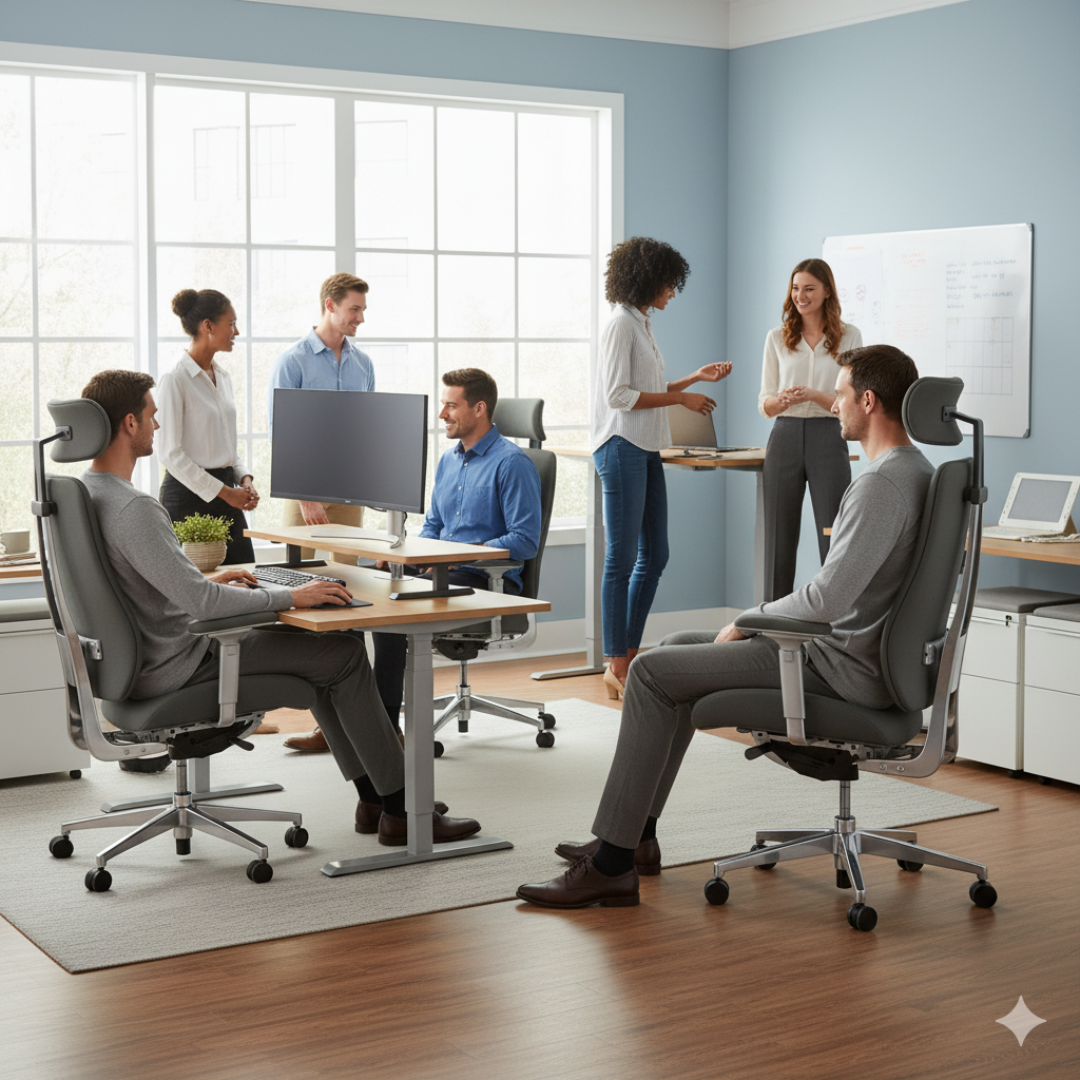
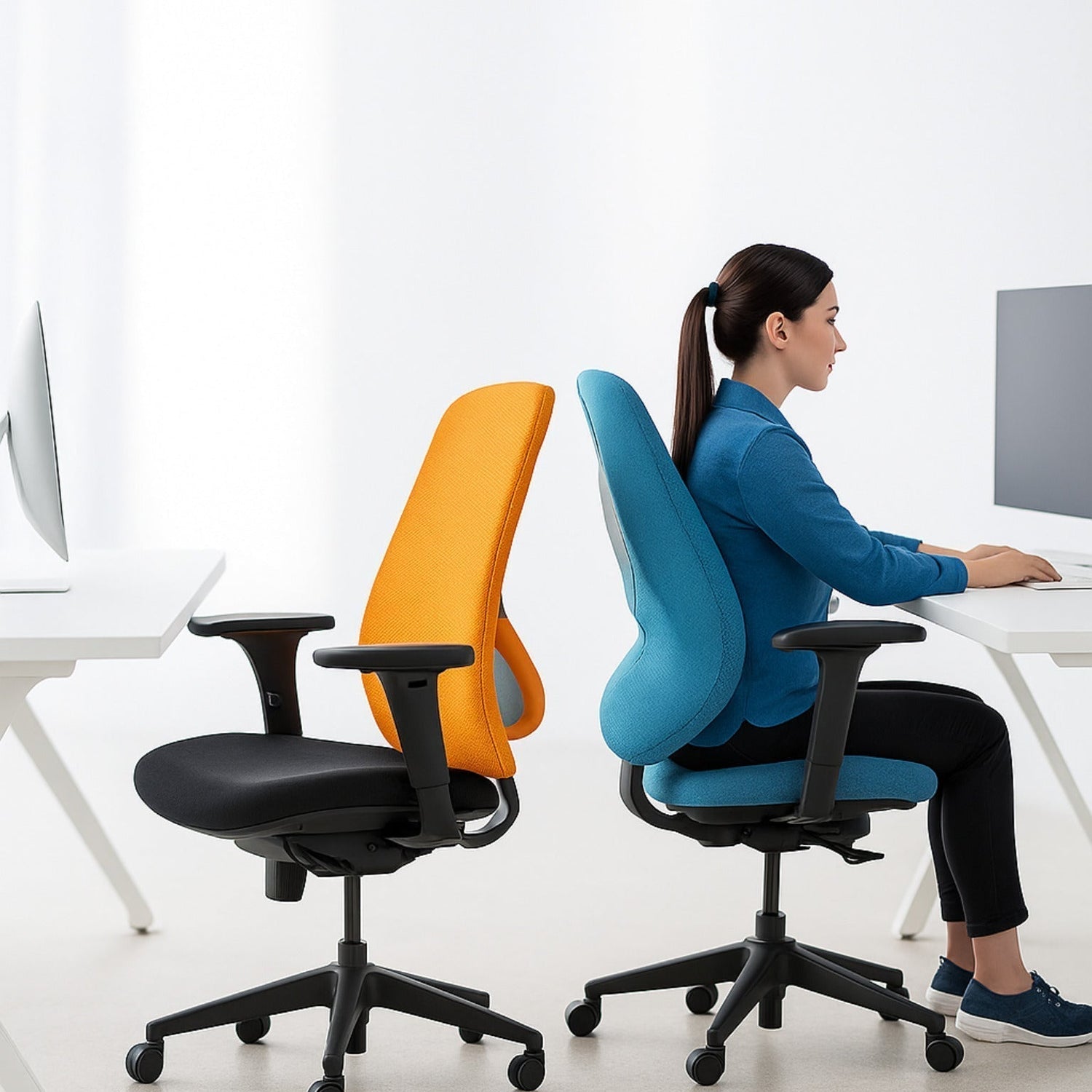
A chair used for work during the day and gaming in the evening needs to fit both activities. The gaming or office label is less useful than the seat shape, adjustment range, arm position, and way the chair moves.
Both categories include simple and highly adjustable designs. The strongest comparison looks at the actual model rather than assuming gaming means relaxed comfort and office means rigid upright sitting.
Style changes the room, but shape changes the fit
Some gaming chairs use a racing-inspired silhouette, contrasting colors, and pronounced side bolsters. Others look closer to conventional task chairs. Office seating also ranges from restrained mesh designs to substantial upholstered models.
A visual preference is a reasonable part of the choice. The functional question is whether the seat and back shape provide usable space. A raised side bolster can reduce the sitting area even when the published overall width looks generous.
Thick padding also does not establish comfort. Cushion firmness, minimum depth, and the back's contact points determine more than the amount of visible foam.
Fit matters at the keyboard and with a controller
Keyboard and mouse use usually require comfortable access to the desk. Controller use may allow a different arm and recline position. The chair should offer support that works for the actual tasks you switch between.
Arm pads need to reach a useful position without lifting the shoulders or stopping close desk access. Height alone may not be enough; spacing and pad movement can matter as well.
The seat should allow backrest contact with room behind the knees. A chair that remains too deep at its shortest setting may look impressive while fitting poorly.
Recline and fit adjustment are different features
A wide recline range changes the back angle. A seat slider changes depth. Lumbar adjustment changes a support feature. One does not substitute for the others.
Independent-angle controls let you position the seat and back separately. A synchronous mechanism coordinates their movement. A body-weight-responsive mechanism reduces conventional manual tension setting.
The preferred approach is personal. A large advertised recline angle is not evidence that a chair provides the most comfortable position for every task.
Back support and headrests
A separate lumbar cushion can change the contact point, but its thickness also moves you forward on the seat. A built-in adjustable contour offers a different approach. Either needs to land comfortably.
A headrest may be useful when reclining, provided it reaches the right position. If it pushes the head forward while typing, the presence of the feature is not enough to make it helpful.
Tall backs, pillows, and adjustable headrests are separate design choices. The current specification should state what the model includes.
Materials and a long working day
Fabric, mesh, polymer, leather, and synthetic coverings have different contact and care properties. A mesh back allows air movement through that surface, while a padded back provides a different feel.
No material guarantees that you stay cool or comfortable for an entire session. Room temperature, clothing, fit, and opportunities to move remain part of the experience.
A gaming label also does not establish intensive-use approval or load capacity. Those requirements belong to the specific model and complete configuration.
Three current OMC comparisons
OM5-XP: a gaming-focused OM5 option

The OM5-XP combines body-activated movement with a gaming-focused design and configurable finishes and support options. It is worth comparing when you like that appearance and movement style for a shared work-and-gaming setup.
The actual selected arms, support features, and configuration matter. Sharing the OM5 name does not mean every model has the same seat or option set.
OM5 Evolved: responsive movement in a task-chair design

The current OM5 Evolved offers a self-weighing recline, bi-lateral lumbar adjustment, a removable seat, and seat-depth adjustment. It is an alternative for someone who prefers a task-chair appearance and that responsive movement.
Automatic resistance still leaves working height, depth, lumbar position, and arms to fit the user.
PT78: detailed independent adjustment
The standard PT78 provides a full multi-function mechanism, adjustable lumbar support, and a seat slider in an upholstered design. It is a useful comparison when you prefer positioning several aspects separately.
Its seat dimensions need to suit you. A more elaborate control system cannot make an unsuitable minimum depth fit.
Value comes from the features you will use
Some gaming designs charge for appearance or extras, while some office models charge for specialized controls, materials, or usage specifications. A higher price does not tell you which of those improvements matters to your setup.
Comparing complete configurations makes the price clearer. Arms and upholstery may change the total, and warranty or return terms should be read for the actual order.
A chair for both activities
A useful choice lets you reach the desk comfortably, supports your preferred seated positions, and gives the arms a practical place during gaming. Movement and breaks remain part of a long session regardless of the category.
OMC can help compare dimensions and mechanisms around the tasks you perform. The label can guide the style; the model's fit should guide the purchase.