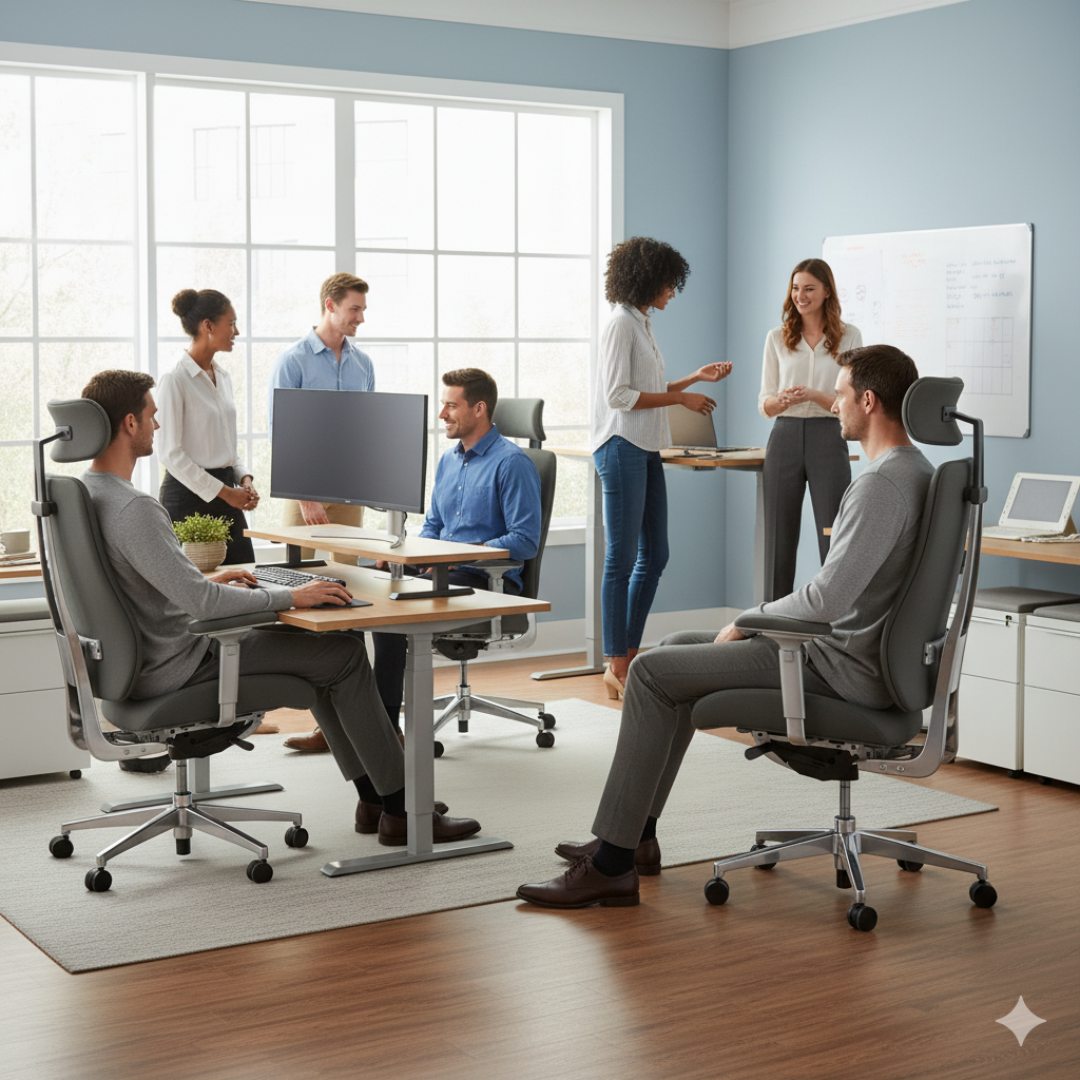
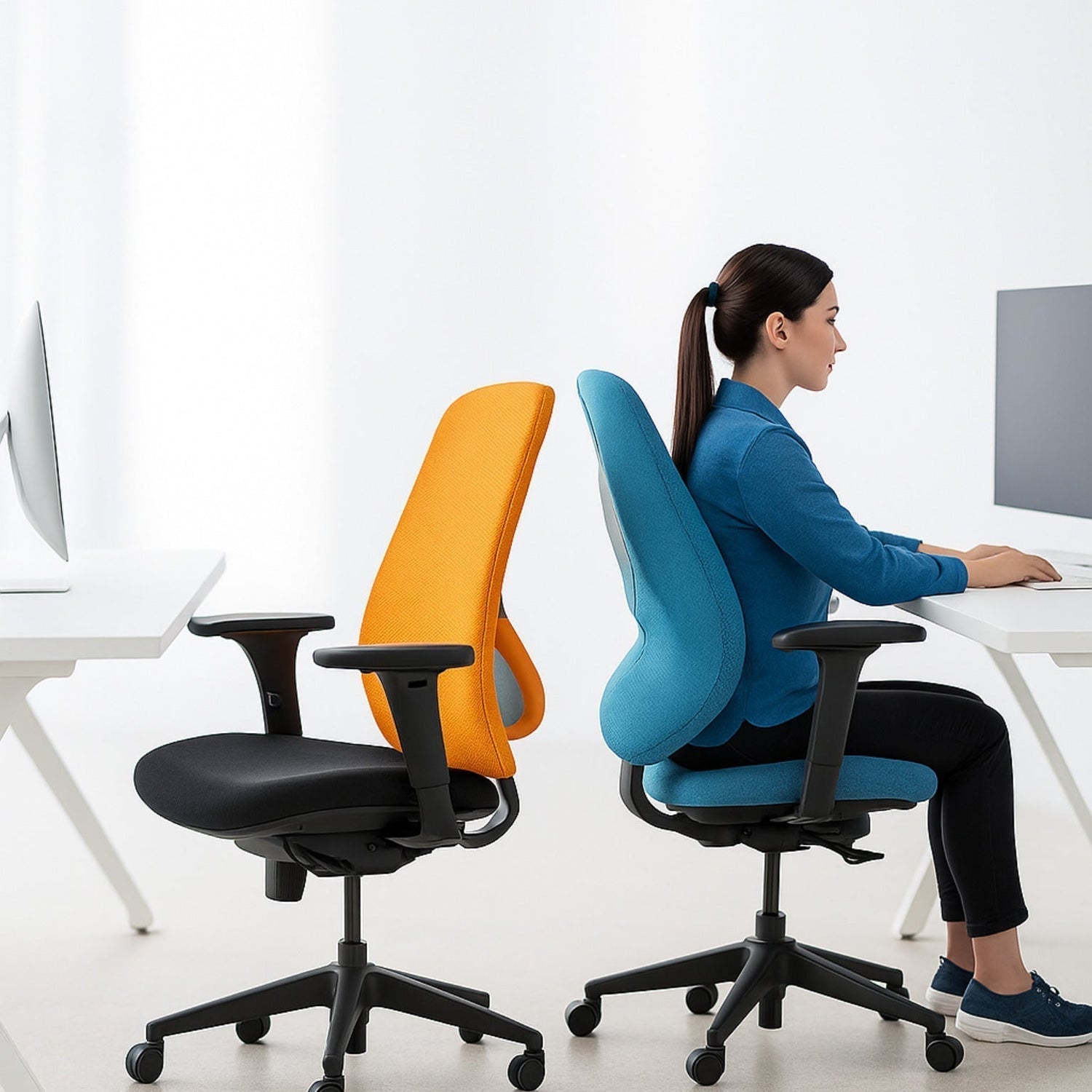
The chair that suits your body is usually the one whose dimensions and support line up with your proportions. Height is useful context, but it cannot describe thigh length, torso length, hip width, or the position where arm support feels comfortable.
“Petite,” “average,” and “tall” can organize a search. They should not become rules that assign one chair to everyone in a category. A tall person may need a longer seat without needing a higher load rating; a shorter person may need more width without needing a tall back.
The measurements that make a difference
- Seat height: the range needs to work with your legs, foot support, and the desk.
- Seat depth: useful thigh support should leave clearance behind the knees while the backrest remains accessible.
- Seat width and arm spacing: both affect the usable sitting space.
- Back shape and height: the contour needs to land comfortably against the torso.
- Load and usage rating: these are separate from dimensions and must suit the complete configuration.
Your current chair offers a reference for all five. Describing which measurement feels wrong is often more useful than describing yourself as a body type.
Smaller users: low height and short depth are separate needs
Someone with shorter lower legs may need a lower seat. Someone with shorter thighs may need less seat depth. Those requirements often occur together, but one does not guarantee the other.
PT62: a lower, shorter-seat comparison

The standard PT62 has an approximate 15.5–19.5-inch seat-height range and a 16–19.1-inch depth range. Its 19-inch-wide seat and full multi-function control make it a useful smaller task-chair comparison.
A lower cylinder still needs to work with the desk. If lowering the seat leaves the keyboard too high, a change in work-surface height or suitable foot support may also be needed.
PAC63: the current name for the former PA63

The PAC63 is another small-to-medium task-chair option with several fit adjustments. The current PAC naming replaces older PA63 references in this article. Its exact configured dimensions are the useful comparison, rather than assuming every small-to-medium chair has the PT62's lower height range.
The CL44EZ is also worth comparing where its simpler independent-angle controls meet the requirement. A “best” label would hide the fact that dimensions and preferred controls can lead to different choices.
Middle-of-the-range proportions still need a personal fit
Standard task-chair dimensions can suit many people, but “average” is a broad description. A slightly shorter thigh or longer torso can change which model feels comfortable.
PT78: wider upholstered seating with several controls

The PT78 has a 21-inch-wide seat, an approximate 18–21.1-inch depth range, and adjustable lumbar support. Its standard full multi-function mechanism lets you position several aspects of the chair independently.
OM5 Evolved: a different movement style
The OM5 Evolved's self-weighing recline reduces conventional manual tension adjustment. It still needs appropriate seat depth, lumbar positioning, height, and arms. Its appeal is the movement style, rather than being automatically a higher-ranked fit than the PT78.
TY68b8: configurable Truly support

The TY68b8 uses a full multi-function mechanism in the Truly family. It offers a different back design and configurable options. A headrest shown or offered as an option should not be assumed to be part of every chair.
Taller users: compare the seat as carefully as the back
A high back may provide the upper-torso contact you want, but longer thighs can call for more depth and longer lower legs can call for more height. These are distinct comparisons.
The PT79 has a tall upholstered back while retaining the standard wider PT seat platform. The PTYM offers a considerably deeper oversized seat: approximately 20.5–23.6 inches deep and 23.5 inches wide, with a standard 19–25-inch seat-height range.

Those larger dimensions can be useful when you need them. They can also make the shortest setting too deep or high for another user. The PTYM's size does not turn its standard 300 lb listing into a higher load rating.
For a mesh-back oversized comparison, the YSYM is another option. Its standard high back should not be confused with an included headrest.
Wider seats and higher load ratings are different requirements
The DB78 has a 22-inch-wide seat and a pear-shaped upholstered back. It is a useful width and support-style comparison, but the chair's rating still needs separate confirmation.
When a higher load requirement is central, the MX88IU is listed at 450 lb in the manufacturer’s 2026 Maxwell pricebook. The 7878MX also has a 450 lb standard rating, but the manufacturer is phasing it out, so availability needs confirmation before ordering. Casters, cylinder, base, mechanism, arms, and intended use all belong in a configuration-specific comparison.
A footrest cannot make a chair's maximum seat height higher. If a tall user needs more height, the appropriate cylinder and desk relationship need to be addressed directly.
A shortlist based on the right differences
Rather than moving through a good, better, best hierarchy, compare two or three chairs that solve your main fit problem. Then consider how you like to recline, the feel of the back material, and the options needed for your desk.
OMC can help compare those dimensions with your current chair and identify suitable configurations. That is a more reliable starting point than a fixed height cutoff or a universal body-type recommendation.