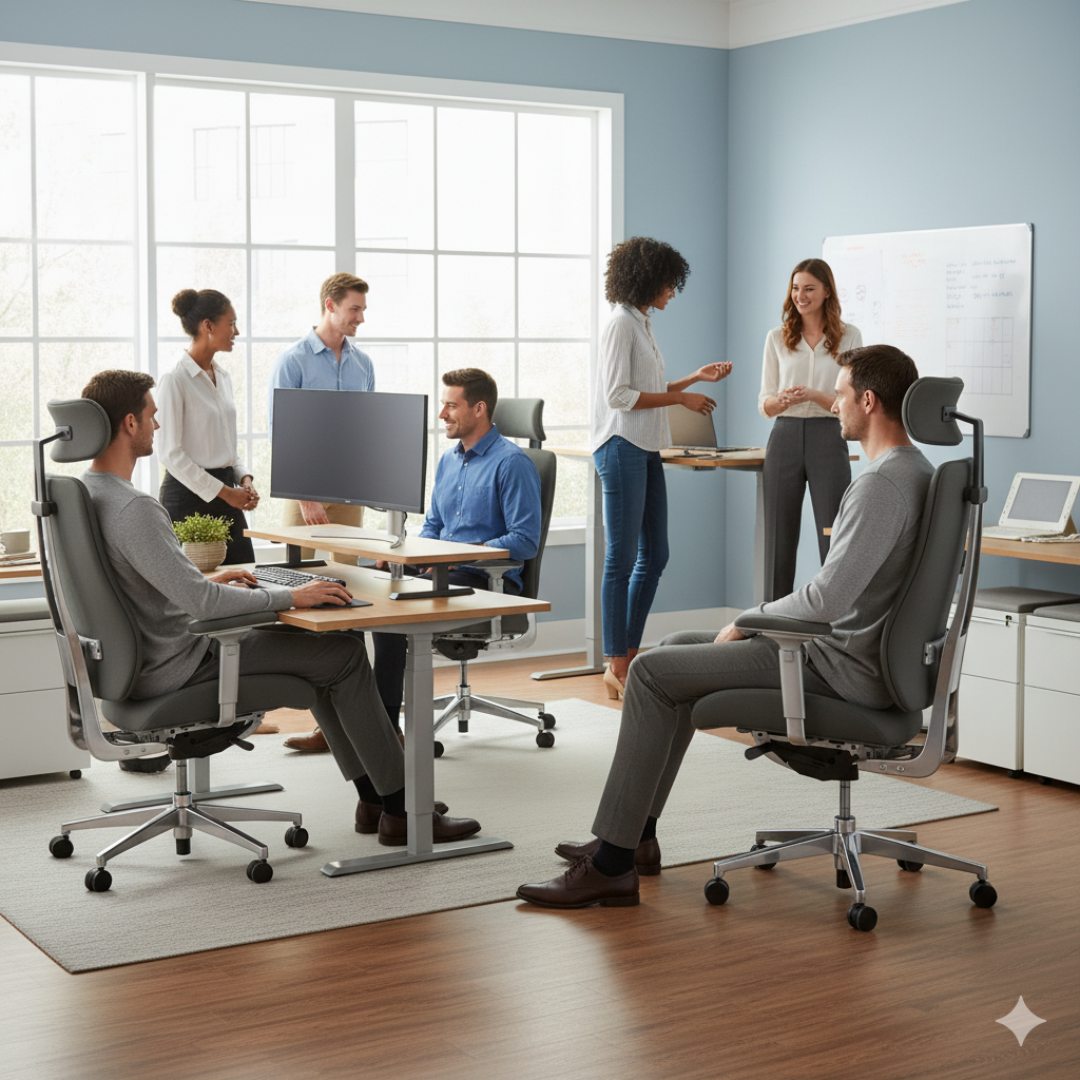
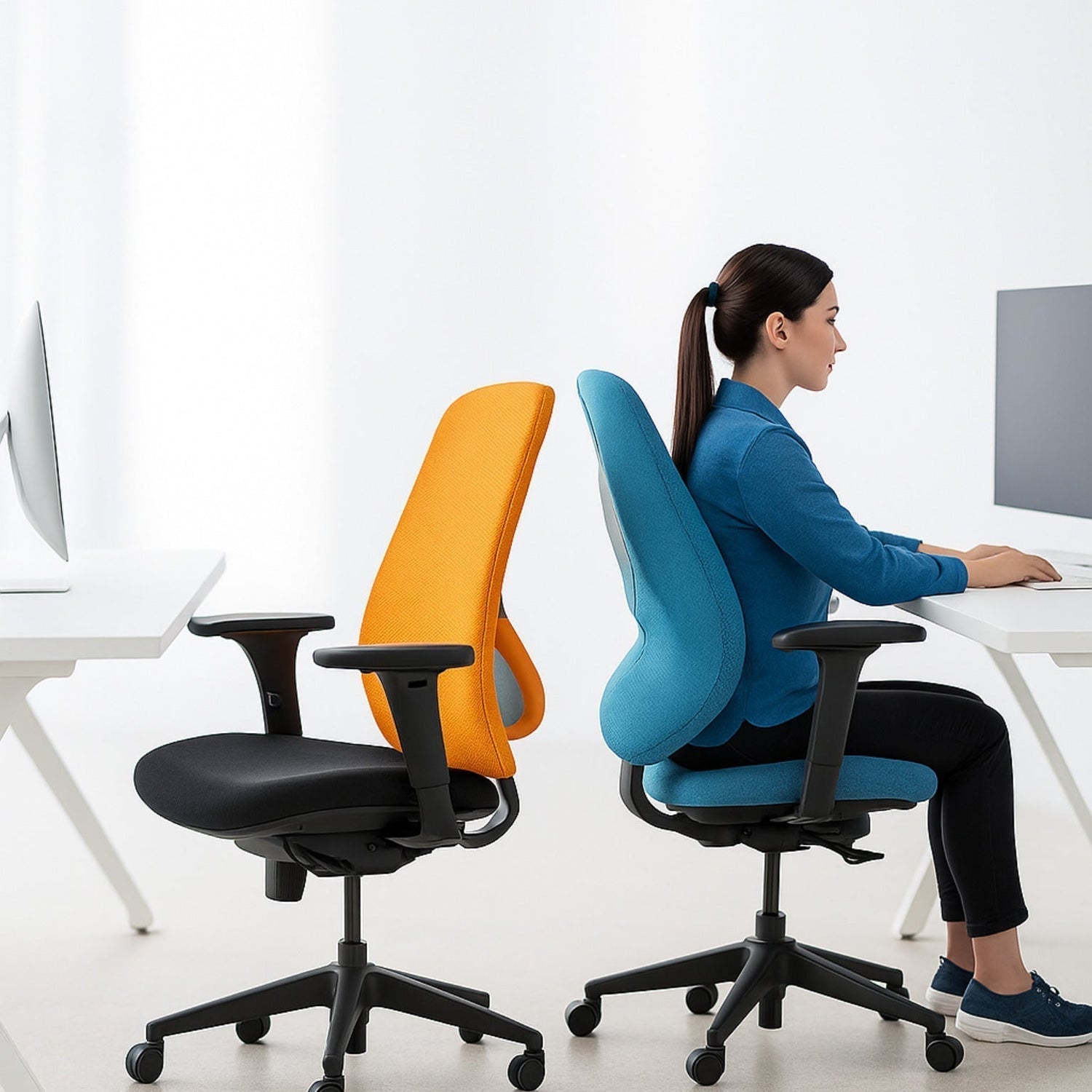
A high-back chair and a mid-back chair can share the same seat, base, and mechanism. Their most visible difference is the height of the backrest, but that label tells only part of the story. The shape of the back, where it contacts your body, and whether it has a separate headrest are just as useful when comparing them.
Neither style is automatically more ergonomic. A well-fitting mid-back chair can be a better everyday choice than a high-back model with a seat that is too deep.
What a mid-back chair offers
A mid-back design generally supports the lower and middle back, leaving more of the upper torso free. The exact contact point depends on your torso length and the chair's back-height adjustment.
This style can feel less enclosing and may suit people who prefer a smaller visual profile at their desk. It is also common in task seating where the priority is reaching the work surface comfortably rather than leaning against a tall upper back.
Mid-back does not necessarily mean petite, lightweight, or compact. A chair's seat width, minimum depth, arm span, and base diameter determine its fit and footprint. Those measurements deserve more attention than the category name.
What changes with a high back
A taller backrest provides more surface behind the upper torso. Some users like that contact when reclining or reading away from the keyboard. Others prefer more freedom around the shoulders.
A high back does not always reach the head, and a tall upholstered panel is not the same as an adjustable headrest. A headrest needs to land comfortably for your neck and the way you recline. If it pushes the head forward during task work, its presence alone is not an advantage.
Backrest height also does not establish weight capacity or intensive-use suitability. Those are separate specifications. A high-back chair can share the same load rating as a mid-back version.
A comparison that goes beyond the label
| Question | Mid back | High back |
|---|---|---|
| Where does support reach? | Usually the lower and middle torso | A larger portion of the torso, depending on fit |
| Is a headrest included? | Usually not part of the design | Only when the specific model or option includes one |
| Does it suit a shorter user? | Possible, if seat height and depth fit | Also possible; back height alone cannot decide |
| Will it take less floor space? | The base, seat, and arms determine that | The same measurements still determine that |
| Is it better for a long workday? | Useful fit and adjustments matter | The same is true; a tall back does not replace movement |
Current OMC mid-back examples
- AF504: a mesh-back task chair with a synchronous mechanism and seat-depth adjustment.
- YS84: a mid-back mesh model with a full multi-function control.
- PT72IU: the current intensive-use model previously referred to here as IU72.
- PAC55-7a: the current PAC-series counterpart to the former PA55 naming.
These chairs illustrate how much can vary inside one category. Mechanism style, seat dimensions, upholstery, and usage specification still distinguish them.
Current OMC high-back examples
- AF508: a high-back mesh alternative in the Affirm family.
- YS88: a high-back mesh chair with a full multi-function mechanism.
- PT69: a taller upholstered back paired with a relatively short seat-depth range.
- AF529: an executive-style mesh model with an adjustable headrest.
The PT69 is a useful reminder that a tall back does not always accompany an oversized seat. Its standard seat depth is shorter than that of some wider task models. Seat height is a separate comparison again.
How the backrest should feel
Comfortable support reaches the lower back without forcing you away from the backrest. A suitable seat depth lets you use that support while leaving clearance behind the knees. Back-height adjustment can help move the chair's contour into a useful position, but it cannot make an unsuitable seat fit.
The upper edge of the back should not interfere with your shoulders or create an awkward pressure point. With a headrest, upright typing and relaxed reclining may call for different positions. A trial sit is especially helpful when those preferences are difficult to capture in measurements.
Which style makes sense for your desk?
A mid-back chair is a reasonable choice when you like a more open feel and its support lands well. A high back is worth considering when you prefer more contact behind the upper torso, especially during reclined work. The category becomes useful after the seat and controls meet your needs.
Persistent neck or back discomfort deserves attention beyond the chair. Screen position, keyboard reach, and the amount of time spent in one position can all affect how the workstation feels.